
Web
Paying is the easy part: when a website costs a lot and is worth little
The price does not depend on how many pages it has, but on what the site has to do. And the most expensive one of all is the one that serves no purpose!
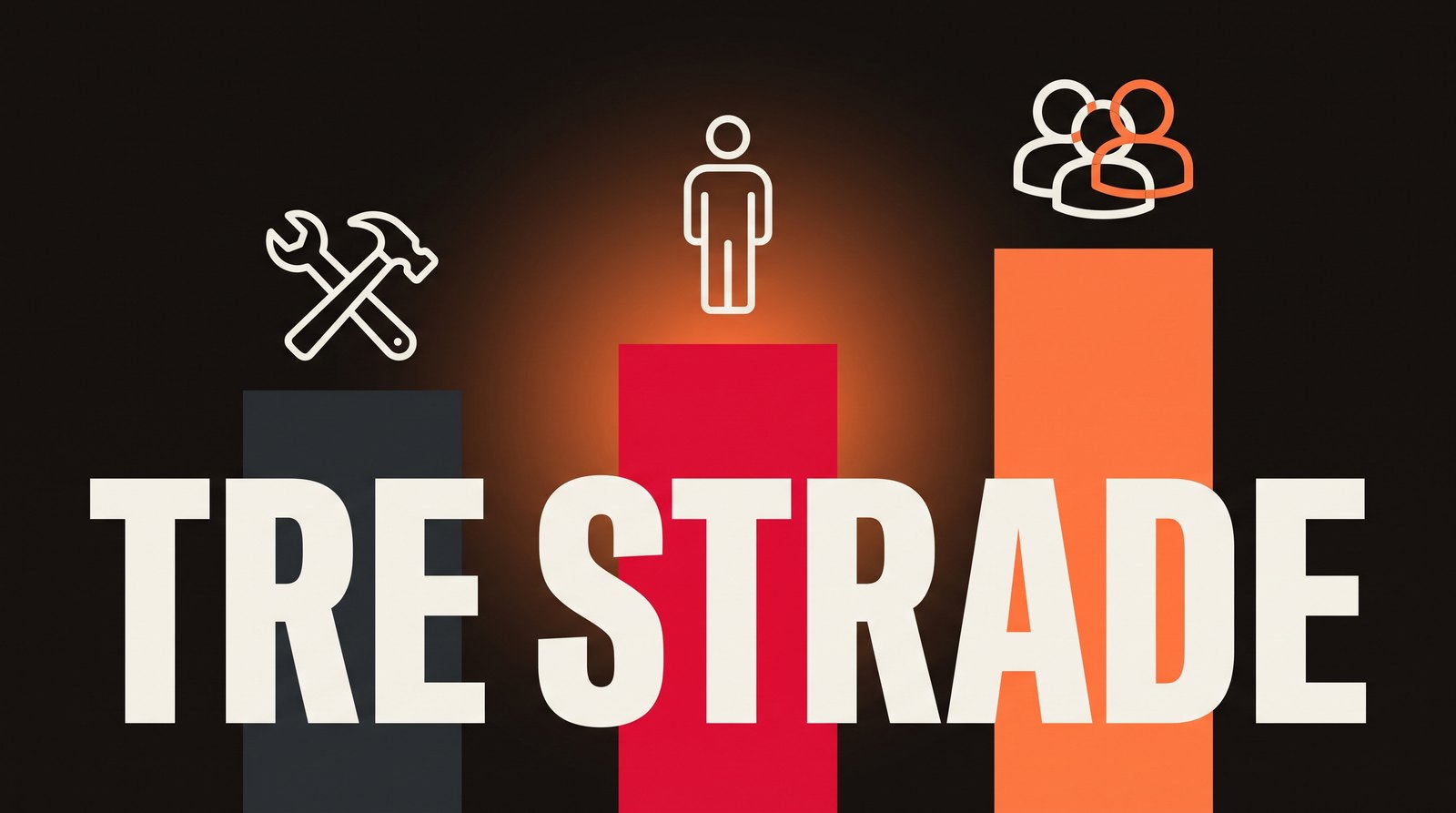
A website can cost a few hundred euro or many thousands: it depends what it has to do, not how many pages it has. Before the price comes the right question: do you need it to get found, to sell, or to gather enquiries? Once that is settled, there are three routes.
Before «what does it cost» comes another question: do you actually need a website, and what for? A website is not an ornament: it is a tool for getting found and bringing in enquiries or sales. If you do not know what it is meant to do, any figure at all will be money spent badly. Once that is settled, there are three routes.
The price does not depend on how many pages it has, but on what it has to do.
Do it yourself: a few hundred euro, but the time is yours
There are site builders: tools that let you do everything alone, without knowing how to code. For a simple shop window, Wix or Squarespace, or for a shop, Shopify, all it takes is a monthly fee and a bit of patience. Some advice if you take this route:
- Take inspiration: look at the sites built well with that tool and start from there, rather than inventing everything.
- Real photographs: do not use glossy stock images, get your own taken.
- Write little and write well: short sentences, and watch the grammar and typos.
- Give yourself a deadline: without a date in the calendar, a do-it-yourself site never gets finished.
It is the right route for starting small. The limit is time and outcome: past a certain point, you cannot go further alone.
A freelancer: roughly €500 to €2,000 and up
A good option, if you find the right one. How to recognise them:
- They are properly registered and get you to sign a contract with clear timings.
- They have a real portfolio and references you can check: search their name online.
- Content — copy and photography — is often charged separately: settle it beforehand.
- Split the payment into stages tied to deliveries: it keeps both sides paying attention.
The limit of a freelancer is that they are one person: for complex projects — an online shop, integrations, promotion — the skills required are too many for one.
An agency: from a few thousand euro and up
The most expensive route, but also the one that protects the investment best, because a group with different skills works on the site. Usually, alongside the site, you will be offered the services that make it work: ranking, advertising, maintenance. What to watch out for:
- That they do not already work for a direct competitor in the same market.
- Be wary of inflated portfolios: famous brands named repeatedly often hide minimal involvement.
- Talk to real people and get them to tell you who will actually run your project.
| Route | What it costs | When it makes sense | The limit |
|---|---|---|---|
| Do it yourself | A few hundred euro a year, plus your own time | A simple shop window, to get going | Without a deadline it never gets finished |
| Freelancer | From €500 to €2,000 and up | A defined project with clear goals | They are one person: not enough on complex projects |
| Agency | From a few thousand euro and up | Online shops, integrations, continuous promotion | Costs more, and needs choosing carefully |
The costs that come afterwards
The price of the site is not the only line item. A website is software, and like any software it has to be kept alive: domain, hosting and maintenance have to be counted every year. Ignoring them is the commonest mistake, and sooner or later it is paid for, with a site that breaks, slows down or becomes a security risk. Budgeting for care over time, from the start, saves you nasty surprises later.

The common-sense rule
On prices it always holds: if it costs too little it is nearly always worth little; if it costs a lot, sometimes it could cost a bit less and work just the same. The point is not to spend the minimum, it is to spend well against what the site has to bring you. It is the thinking behind how we build websites and e-commerce.
We have written down how to read a quote for a website, line by line: what is included, what is charged separately, and where the costs that come back every year are hiding. We will email it to you.
- The price depends on what the site has to do, not on how many pages it has.
- Three routes: do it yourself to start small, a freelancer for a defined project, an agency for the more involved cases.
- Domain, hosting and maintenance have to be budgeted every year: ignoring them is the commonest mistake.
Frequently asked questions
Why are the quotes so different from each other?
Because «website» means everything and nothing. A few-page shop window and an online shop with a catalogue and payments are not the same thing. Compare what the sites do, not just what they cost.
Cheap site or made to measure?
It depends on the goal. To get going, not much may be needed; if your livelihood depends on the site, skimping on the foundations is paid for later. Spend where the site brings you customers, cut where it is only appearance.
Are there costs after handover?
Yes, and ignoring them is the commonest mistake. Domain, hosting and maintenance have to be counted every year. A website is software: keep it updated, or sooner or later it breaks.